What is moissanite?
By Nico Melian, developer of the Diamond Tester app
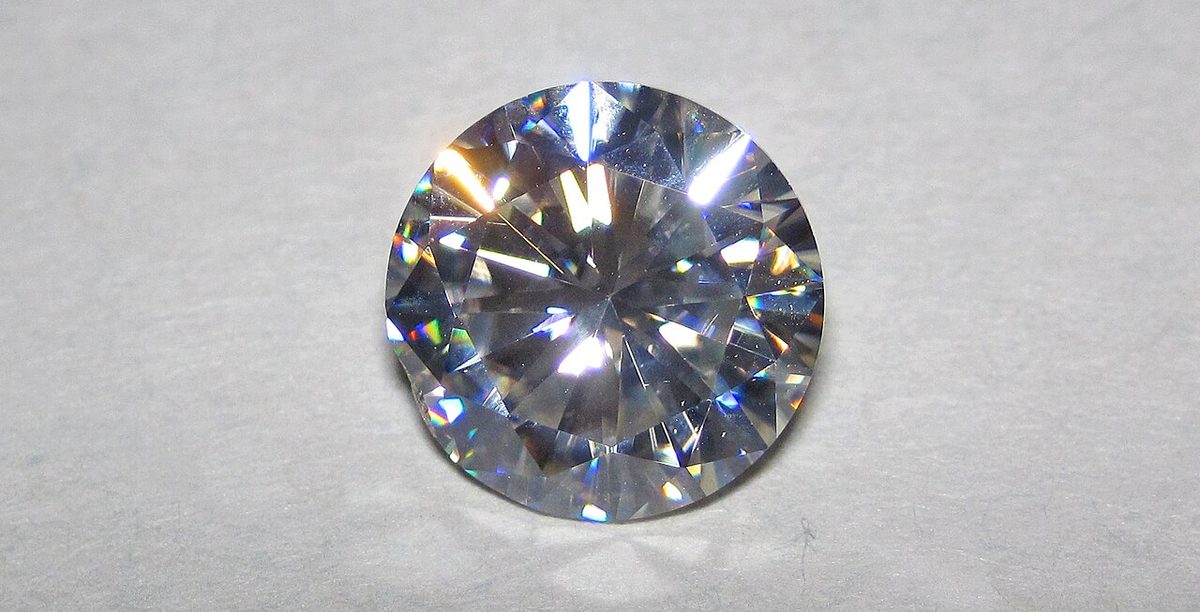
Definition
Moissanite at a glance
The numbers below are from GIA's study of gem moissanite published in Gems & Gemology when it first reached the market. They are the whole reason moissanite looks the way it does and tests the way it does.
| Property | Moissanite | Diamond | What it means for you |
|---|---|---|---|
| Chemistry | Silicon carbide (SiC) | Carbon (C) | Different material, not a type of diamond |
| Mohs hardness | 9.25 | 10 | Harder than sapphire and ruby, fine for daily wear |
| Refractive index | 2.65 to 2.69 | 2.42 | Returns more light than diamond |
| Dispersion | 0.104 | 0.044 | About 2.4 times the rainbow fire |
| Specific gravity | 3.22 | 3.52 | Lighter: same size stone weighs less |
| Optical character | Doubly refractive | Singly refractive | Facet edges look doubled under a loupe |
| Thermal conductivity | Close to diamond | Very high | Fools basic thermal testers |
| Electrical conductivity | Conducts (semiconductor) | Insulator (most stones) | Caught by electrical and multi testers |
Where it comes from
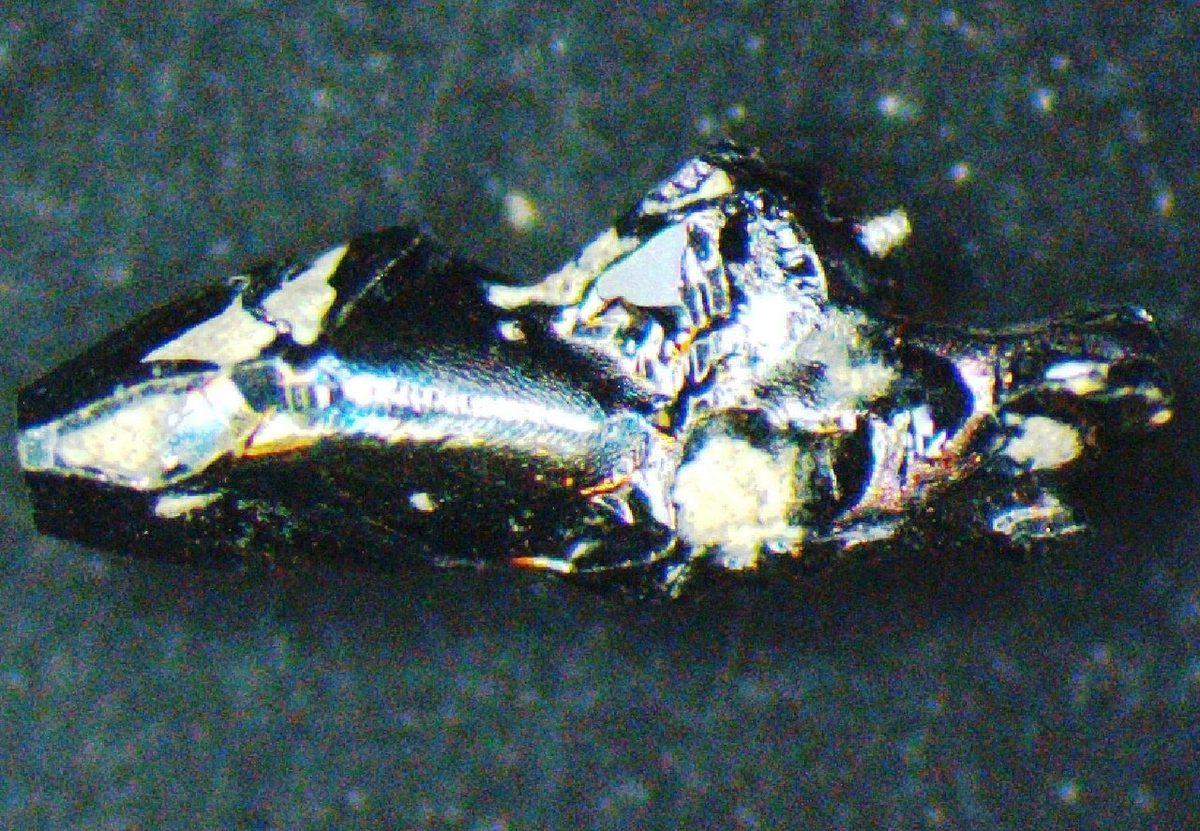
The American Gem Society describes moissanite as discovered more than 120 years ago inside a meteorite. The French chemist Henri Moissan, who later won a Nobel Prize for other work, examined tiny crystals from the Canyon Diablo meteorite site in Arizona in the 1890s and at first took them for diamond. They turned out to be silicon carbide, and the mineral was named after him.
Natural moissanite is extremely rare and occurs as tiny grains, far too small to cut. Silicon carbide had already been made industrially for decades as an abrasive (carborundum), but growing large, clear single crystals took until the 1990s. GIA's 1997 paper covered it as a brand new diamond substitute arriving in stores. So when a seller says "moissanite," they mean lab grown silicon carbide. There is no mined moissanite jewelry to choose instead.
What it looks like next to diamond
Side by side in good light, most people notice one thing first: moissanite throws more color. Its dispersion is more than double diamond's, so the flashes break into orange, green and blue much more often, especially in sunlight or under a phone flashlight. Some buyers love it. Others find it reads as obviously "not diamond" from a few feet away. Larger stones show it more.
The second difference needs a loupe. Moissanite is doubly refractive. Look through the side of the stone at an angle and the facet edges on the far side appear doubled, like a slightly out-of-register print. Cutters usually orient the crystal so this is hard to see face up. Diamond never doubles. We show how to check in diamond vs moissanite.
Color used to be the third tell. Early gems often carried a faint gray, green or yellow tint. Current production is sold in colorless and near colorless grades, though each maker uses its own grading terms rather than the GIA D to Z scale. If you want to compare, see our diamond color scale.
Durability
At 9.25 on the Mohs scale, moissanite is harder than every common gem except diamond. In practice that means it keeps sharp facet edges and a polished surface through years of daily wear, which is not true of cubic zirconia (8 to 8.5) or glass. It also handles heat well enough for normal jewelry repairs. Clean it the same way you would a diamond: warm water, mild soap, a soft brush. Our ring cleaning guide applies to it as is.
Price and value
Moissanite is priced as a lab made gem, which puts it well below both mined diamonds and lab grown diamonds of similar size. Two things trip buyers up:
- Size versus weight. Because moissanite is lighter than diamond, sellers often describe stones by millimeter size or by "diamond equivalent weight" (DEW). A "2 ct DEW" moissanite is the size of a 2 carat diamond but weighs less. Our carat to mm chart helps you compare.
- Resale. Treat it as having little to no resale value. You are buying the look and the durability.
Who should buy moissanite
| Buy moissanite if | Skip it if |
|---|---|
| You want a big, durable stone on a modest budget | You want a diamond, full stop. Lab grown diamond exists for that |
| You like extra color and sparkle | Rainbow flashes bother you in sunlight |
| You will wear it daily and want it to stay sharp | Resale or heirloom value matters to you |
| You are fine telling people it is moissanite | You want it to pass as diamond under a jeweler's tester |
Moissanite vs the other alternatives
Moissanite usually gets compared with two other stones. Against cubic zirconia it wins on hardness and on how it ages; we break that down in moissanite vs cubic zirconia. Against a lab grown diamond the choice is closer: the lab diamond is a real diamond and looks like one, moissanite is cheaper and flashier. See moissanite vs lab diamond. For the simulant that shows up most in costume jewelry, read diamond vs cubic zirconia.
Is moissanite a fake diamond?
It depends on what fake means. Moissanite is a real gem material with its own chemistry and its own name. It only becomes fake when someone sells it as diamond. Gemologists call it a diamond simulant: a material that looks like diamond but has a different composition, crystal structure and properties. GIA uses the same word for cubic zirconia, glass and white sapphire.
Two terms in listings are worth decoding. "Moissanite diamond" is a contradiction; the stone is moissanite. "Created moissanite" or "lab created moissanite" is simply accurate, since all gem moissanite is made in a lab. A seller who uses "diamond" anywhere near the word moissanite without making that clear is blurring the line the FTC Jewelry Guides draw.
How moissanite is graded
There is no independent grading system for moissanite comparable to the GIA scale for diamonds. Makers grade their own stones for color and clarity and issue their own certificates. That is fine as product information, but it is not an independent lab report, and the terms are not consistent from one brand to the next. Judge by eye: compare color against a known white stone in daylight and look at cut quality the way you would with a diamond, using our cut grades guide.
Our take
Moissanite is a good stone sold badly. It is hard, bright and cheap, and the only problem is when someone calls it a diamond, or a "moissanite diamond," which does not exist. Buy it for what it is. If you are checking a stone you already own and suspect it is moissanite, a loupe and a jeweler's multi tester will settle it in minutes, and our piece on whether moissanite passes a diamond tester explains which result to trust. For the bigger picture on grading, see the 4Cs explained.
FAQ
Is moissanite a real diamond?
Is moissanite natural or lab made?
Does moissanite get cloudy?
Is moissanite the same as a lab grown diamond?
Sources
Worth being clear: everything here, and the app itself, is an educational reference. At-home tests narrow things down, they do not certify a stone. Before you buy, sell or insure anything of real value, get it looked at by a certified gemologist or an independent appraiser.
Want a second opinion on the stone in your hand?
Diamond Tester reads a photo and gives you its visual take on the stone, the 4Cs and a value range, plus what to check next. It does not replace a jeweler's tester or a lab report. First scan is free on iOS and Android.