Moissanite vs lab diamond
By Nico Melian, developer of the Diamond Tester app
The pick
These two get lumped together because both come out of a lab and both cost far less than a mined diamond. They are not the same thing. A lab grown diamond is carbon, chemically and physically a diamond. Moissanite is silicon carbide, a different mineral that imitates diamond. That difference drives every row below.
Head to head
| Factor | Lab grown diamond | Moissanite | Edge |
|---|---|---|---|
| What it is | Diamond (carbon) | Silicon carbide | Lab diamond, if you want a diamond |
| Mohs hardness | 10 | 9.25 | Lab diamond, slightly |
| Brilliance (refractive index) | 2.42 | 2.65 to 2.69 | Moissanite returns more light |
| Fire (dispersion) | 0.044 | 0.104 | Depends on taste |
| Looks like a diamond | Is one | Close, with more color | Lab diamond |
| Color grading | GIA or IGI D to Z scale | Maker's own grades | Lab diamond |
| Independent lab report | Standard (GIA, IGI) | Rare; usually a maker's certificate | Lab diamond |
| Weight for the same size | Heavier (SG 3.52) | Lighter (SG 3.22) | Neither |
| Diamond tester result | Diamond | Moissanite on a multi tester | Lab diamond |
| Price for the same size | Higher | Lower | Moissanite |
| Resale | Weak | Weak to none | Neither |
Hardness, RI and dispersion for moissanite come from GIA's Gems & Gemology study of the material. Lab grown values are diamond values: GIA states lab grown diamonds have essentially the same chemical, physical and optical properties as natural ones.
The look: the only factor most people notice
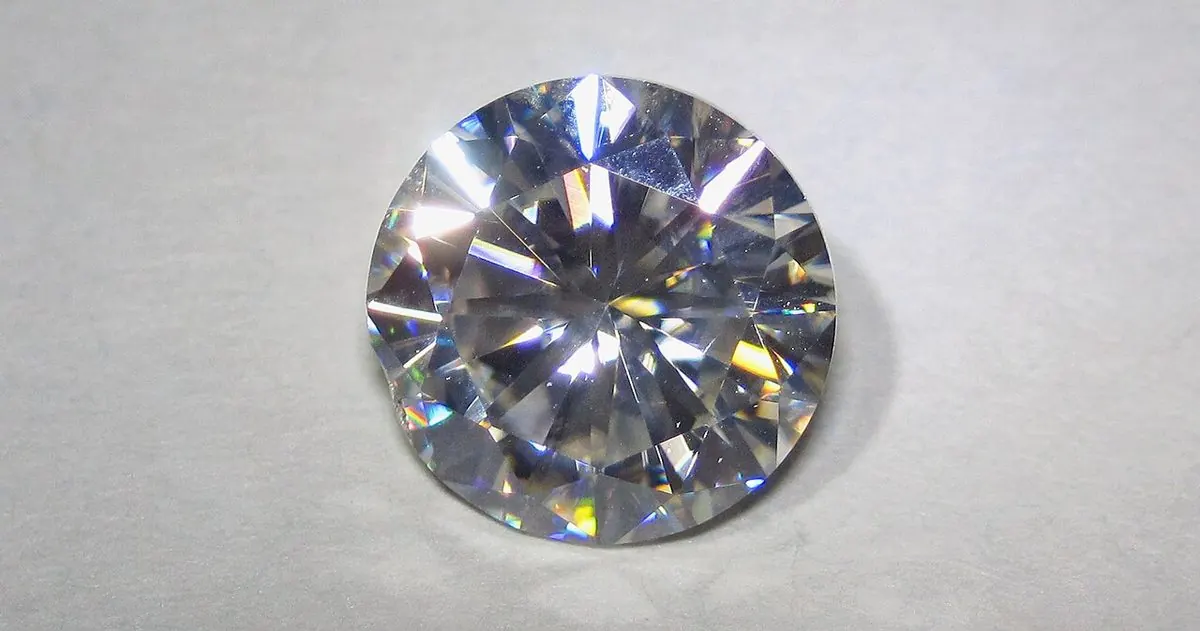
Put a well cut lab diamond and a well cut moissanite of the same size side by side in office light and many people struggle to pick. Take them outside or under a phone flashlight and the moissanite shows itself: far more colored flashes, because its dispersion is more than double. Some buyers call that more sparkle. Others call it a disco ball. Neither is wrong, but you should see both in person, in daylight, before you decide. Our flashlight test shows what to look for.
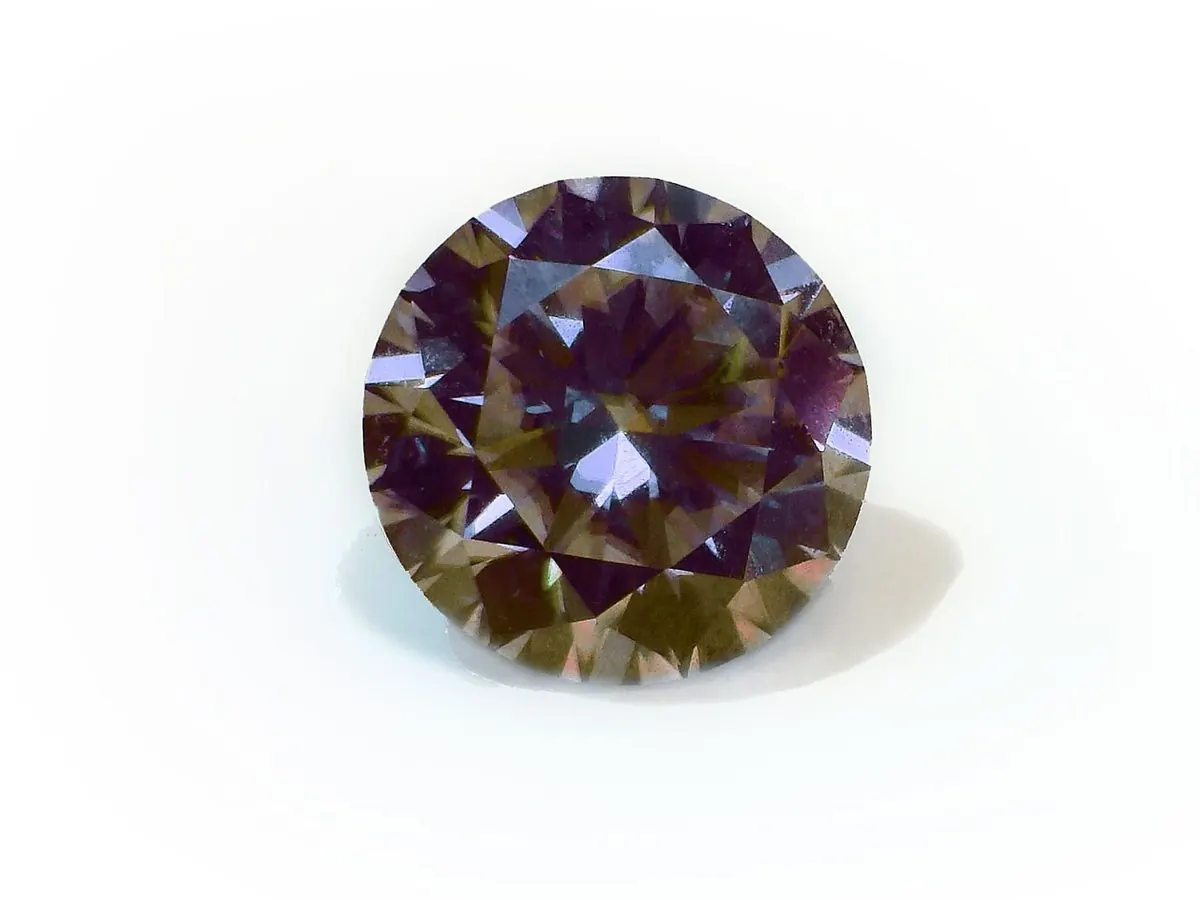
Color is the second visual difference. A lab diamond is graded on the same D to Z scale as a mined one, so you know what "G" means. Moissanite makers use their own color names. Early moissanite often had a visible tint; current colorless stones are much better, but compare a moissanite next to a known colorless diamond if color matters to you. See the diamond color scale for reference.
Durability: closer than it sounds
Diamond is 10 on the Mohs scale, moissanite 9.25. Both are far harder than the dust and grit that dulls softer stones, and both keep sharp facets through daily wear. Moissanite will not cloud or scratch the way cubic zirconia does. For an everyday ring, durability is not a reason to pick either one over the other. If your real comparison is with CZ, read moissanite vs cubic zirconia.
Money: what you are actually paying for
- Moissanite is the cheapest way to get a large, hard, bright stone. The savings grow with size.
- A lab diamond costs more but buys the word diamond, a standard grading scale, and an independent report from GIA or IGI.
- Neither holds value. Lab diamond retail prices have kept falling as production grows, and the secondhand market for both is thin. Plan to keep it.
- Compare by millimeter, not carat. Moissanite is lighter, so sellers quote "diamond equivalent weight." Use our carat to mm chart and compare stones of the same diameter.
Which buyer are you?
| If you | Get |
|---|---|
| Want a diamond and nothing else | Lab grown diamond |
| Want the biggest stone your budget allows | Moissanite |
| Love colorful sparkle | Moissanite |
| Care about a recognized grading report | Lab grown diamond |
| Need it to read as diamond on a jeweler's tester | Lab grown diamond |
| Want a mined, natural stone | Neither. See our natural vs lab comparison |
For the natural side of the question, our lab grown vs natural diamond comparison covers price, resale and how origin is confirmed. And if you are not sure whether lab stones count, the answer is in are lab grown diamonds real.
How to buy either one without getting burned
- Lab diamond: insist on a report from GIA or IGI that states laboratory grown. The FTC requires the qualifier, and the report number is often laser inscribed on the girdle.
- Moissanite: it must be sold as moissanite. Ignore "passes a diamond tester" claims; that only means it fools a thermal pen. We explain in does moissanite pass a diamond tester.
- Both: check the cut. A poorly cut stone of either type looks dull. Our cut grades guide shows what good proportions look like.
Misconceptions that push people the wrong way
| What people say | What is true |
|---|---|
| Moissanite is a type of lab diamond | It is silicon carbide, a different mineral |
| Moissanite gets cloudy | At 9.25 Mohs it resists scratching; cloudiness is a soap or oil film |
| Lab diamonds are fake | They are diamond by chemistry and under the FTC definition |
| Nobody can tell moissanite from diamond | A multi tester or a loupe check for doubling settles it in minutes |
| Lab diamonds are an investment | Retail prices keep falling and resale is thin |
Living with either one
Day to day, the two stones need the same care. Both pick up a film of skin oil and lotion that dulls the sparkle, and both come back with warm water, a drop of dish soap and a soft toothbrush; our cleaning guide covers it. Both survive normal knocks far better than softer gems, but neither is indestructible. A hard hit on a sharp edge or girdle can chip a diamond as well as a moissanite. The setting usually fails before the stone does, so have the prongs checked once or twice a year whichever one you choose.
One practical difference: if you ever want to upgrade or reset the stone, a lab diamond with a GIA or IGI report is easier to describe, insure and trade in at the stores that accept lab stones. Moissanite is mostly a keep forever purchase.
Questions to ask before you pay
- Is there an independent lab report, and does the girdle inscription match it?
- For moissanite: whose color grade is this, and can I see the stone next to a known colorless diamond?
- What are the exact millimeter dimensions, not just the carat or diamond equivalent weight?
- What is the return window, and does it survive an independent test?
- Is the setting solid gold or platinum, and is it stamped?
A seller who answers all five without hesitation is usually a seller worth buying from, whichever stone you choose.
Our take
For most engagement rings we would point people to a lab grown diamond: it is a diamond, it is graded on the scale everyone understands, and it does not invite the "is that real?" conversation. Moissanite is the right call when budget or size matters more than the word diamond, and when you actually like the extra fire. Both are honest choices if the seller is honest about which one you are getting. For the full story on moissanite as a material, see what is moissanite and diamond vs moissanite.
FAQ
Is moissanite a lab grown diamond?
Which sparkles more, moissanite or lab diamond?
Which is more durable?
Will people be able to tell moissanite from a lab diamond?
Sources
Worth being clear: everything here, and the app itself, is an educational reference. At-home tests narrow things down, they do not certify a stone. Before you buy, sell or insure anything of real value, get it looked at by a certified gemologist or an independent appraiser.
Want a second opinion on the stone in your hand?
Diamond Tester reads a photo and gives you its visual take on the stone, the 4Cs and a value range, plus what to check next. It does not replace a jeweler's tester or a lab report. First scan is free on iOS and Android.


Keep reading
Price, resale and how to tell them apart.
Diamond vs moissaniteHow to tell the two apart at home.
Diamond color scaleD to Z, and where to stop paying.
How to tell if a diamond is real with a flashlightWhat the beam really shows, why more rainbow is a warning sign, and the three things a flashlight cannot tell you.
Are lab grown diamonds real?Same carbon, same crystal, same tester result. The legal answer, the physical answer, and the resale answer.